



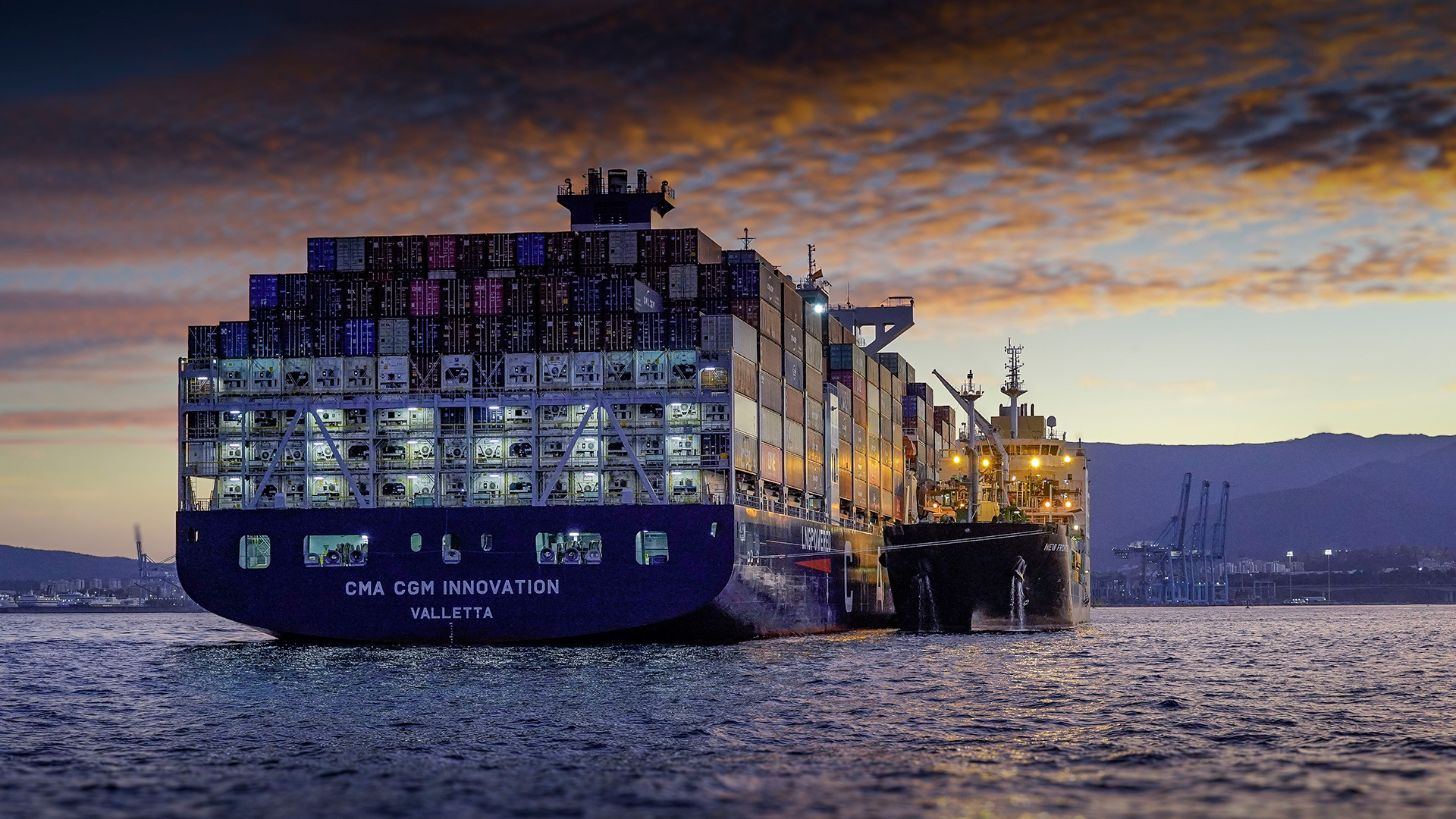
GREEN ENERGY HUB. Port of Algeciras Leads in LNG and Bio-LNG Bunkering
Algeciras Consolidates Its Role as Southern Europe’s LNG Bunkering Hub, with Bio-LNG Leading the Way
Algeciras is now the top LNG bunkering port on the Iberian Peninsula and one of the three busiest in Europe, behind only Rotterdam and Marseille-Fos. According to GASNAM, the Bay of Algeciras delivered 333,833 m³ of LNG to ships in 2025 across 78 ship-to-ship (STS) operations.
A world first in bio-LNG
Nearly 16% of that volume, 51,923 m³, was liquefied biomethane (bio-LNG), a renewable fuel. No other port in the world supplied more bio-LNG to international shipping last year. In climate terms, this volume avoids greenhouse gas emissions equivalent to the yearly carbon absorption of 9,000 mature trees, while also all but eliminating SOx, NOx and particulate emissions. For shipping lines, it is a drop-in way to cut CO₂ immediately.
What made it possible
Three suppliers authorised by the Port Authority of the Bay of Algeciras (APBA) carry out LNG bunkering in the bay: Axpo, Shell and Peninsula. On the infrastructure side, Enagás has played a key role through its subsidiary Scale Green Energy. Together, they link biogas produced inland from urban and agricultural waste with growing demand from shipping, which is being pushed by the EU ETS and FuelEU Maritime regulations.
Capacity is growing too. Nine LNG bunker vessels operate on the Peninsula, with four more under construction, and five of them are based in Algeciras. They serve a global fleet of container ships, ferries and car carriers that is burning far more LNG in Iberian ports than before.
Momentum for 2026
GASNAM describes 2025 as a turning point: the Peninsula has gone from spectator to protagonist in sustainable shipping. Algeciras handled 37% of all LNG bunkered in Spain and Portugal, and Shell, Peninsula and Axpo doubled their 2024 volumes, the biggest year-on-year jump recorded in any European port system. This narrows the gap with the Netherlands, where bunkering is flat and concentrated in Rotterdam. If the trend holds, GASNAM expects Spain and Portugal combined to overtake Northern Europe in sustainable bunkering in 2026.
Algeciras’ strategic location, extensive gas infrastructure and supply capacity are backed by rising demand: LNG-fuelled ships, in service and on order, already make up 10% of the global fleet.
Looking further ahead
Spain also aims to become a leading producer of e-fuels, such as e-methanol and e-ammonia, built on its green hydrogen strategy. Source: GASNAM.